The Wefi
A Custom FFXIV Bird Race

Physical Traits
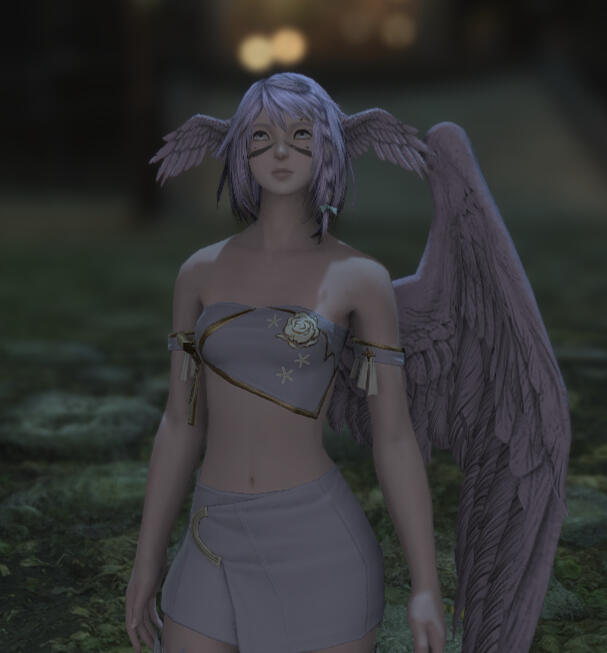
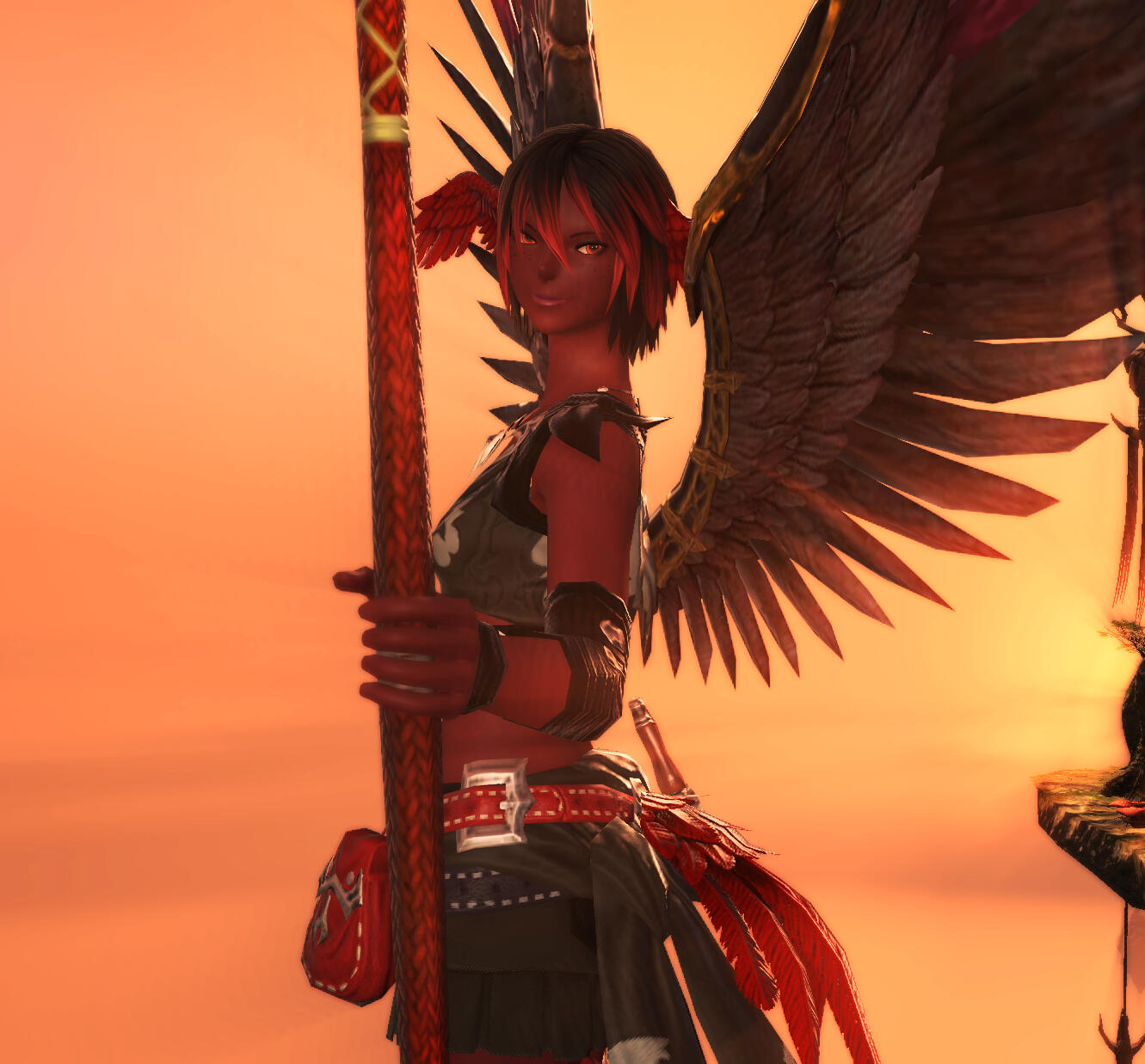
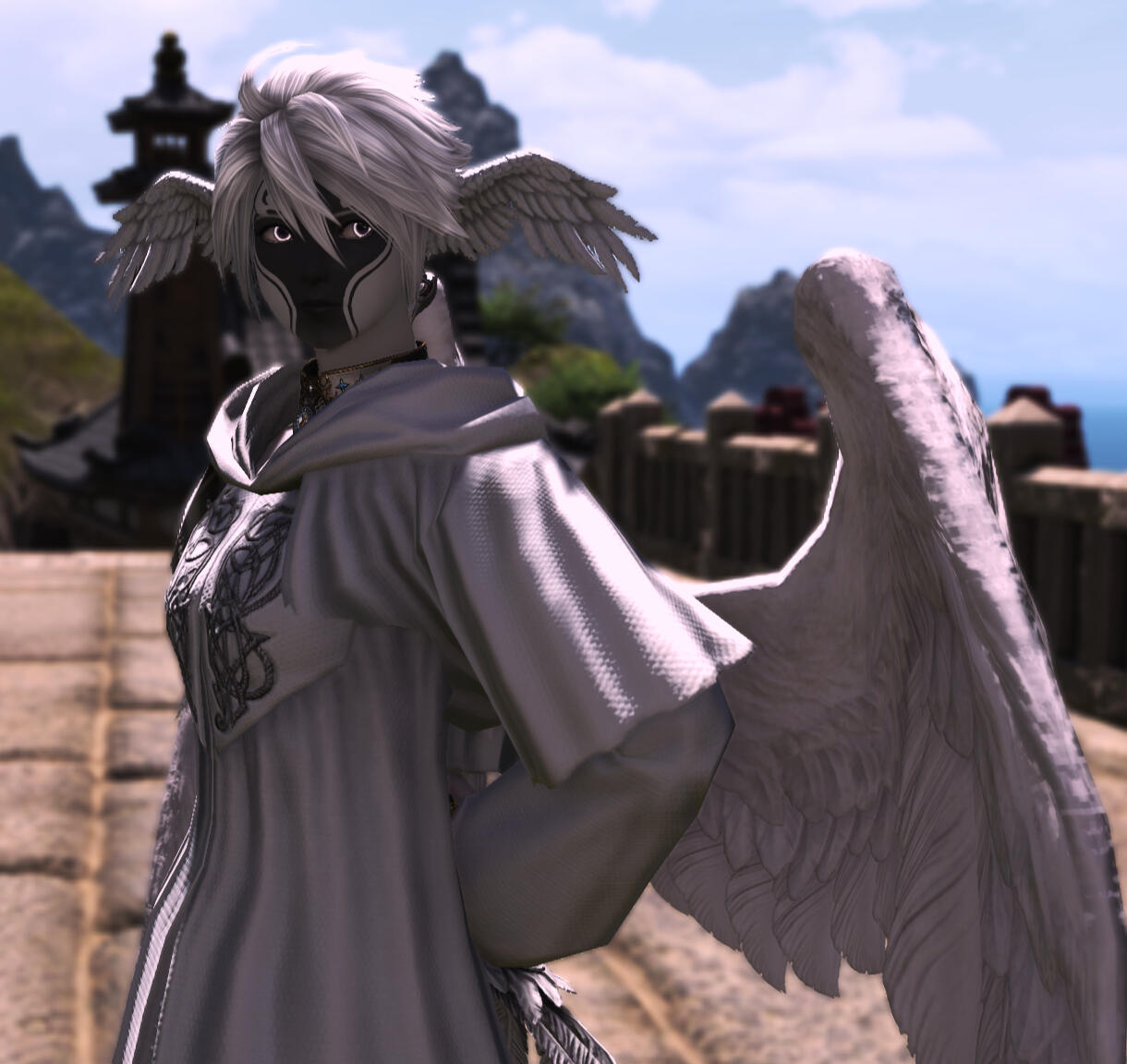
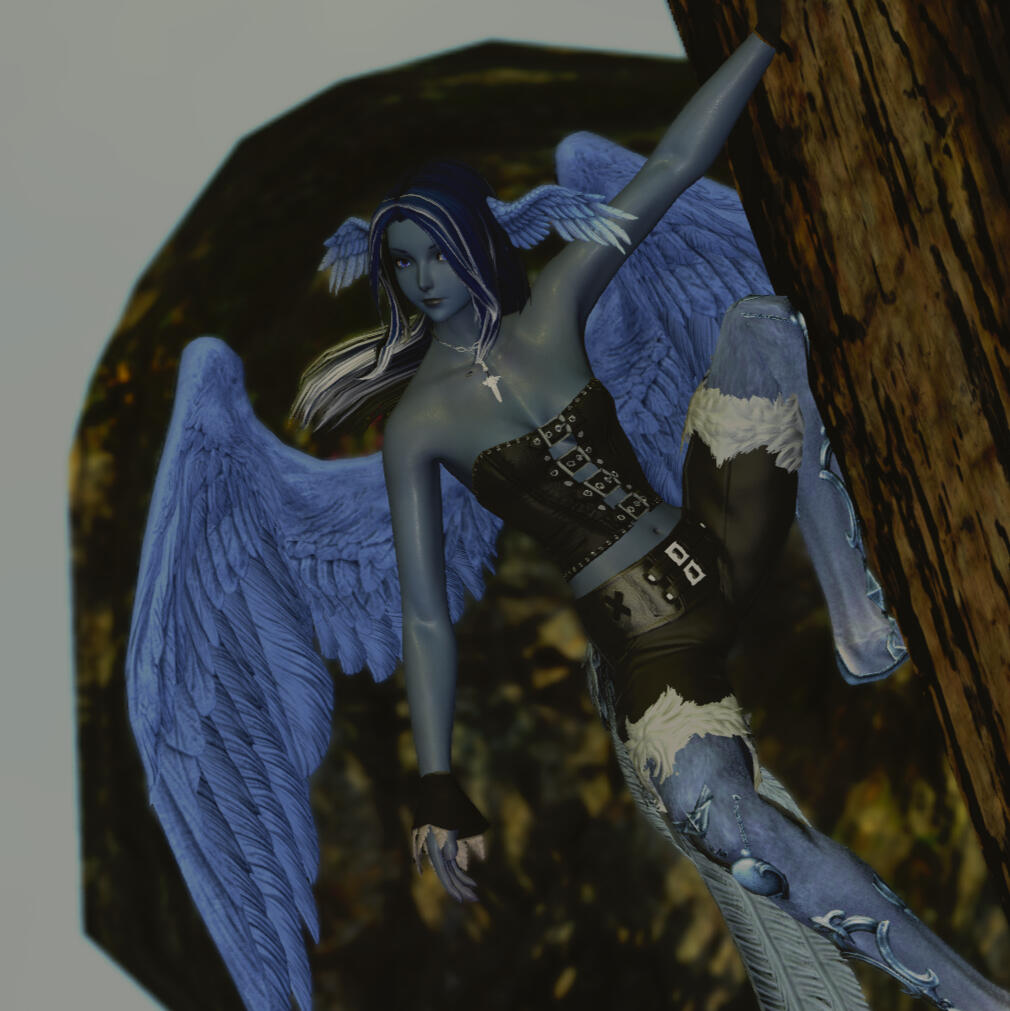
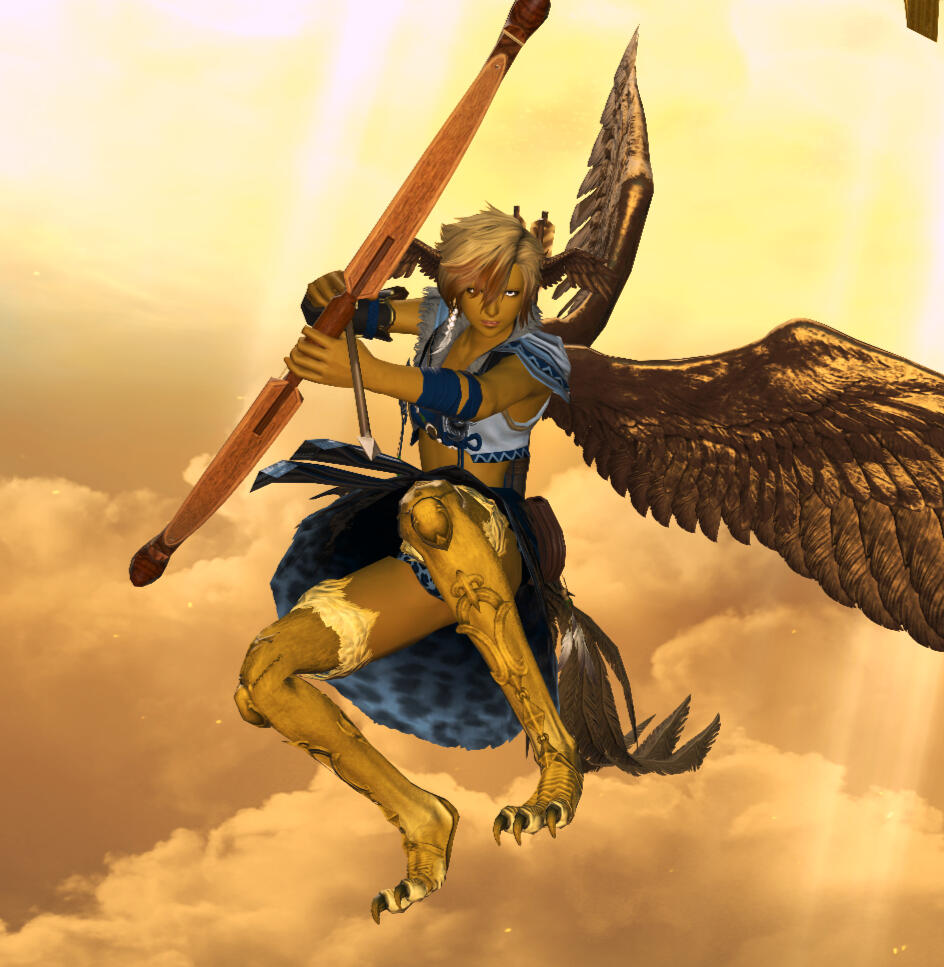
Appearance: Small humanoid with feathered wings. Often also have feathery tails and an additional pair of vestigal wing-like structures on their heads that function as ears. Have clawed, bird-like feet. What appears to be hair is actually filoplumes, a feather that appears to be the structure of hair. While a Wefi's filoplumes can grow to various lengths, most of them do not grow out much longer than a short hairstyle might, and most Wefi see no need to cut their filoplumes.
Height: 3'8" to 4'2" (112 cm to 127 cm)
Coloration: Females tend towards lighter/pastel colors, while males tend towards darker/bolder colors, although this is more of a rule of thumb than absolute.
Lifespan: 60 to 65 years.
Language: Their language is unique to them; those still in the Nest/Colonies will never have heard another language. Language is based on Amharic/Ethiopian.
Clothing: The Wefi tend to wear minimal clothing, as it adds weight and hampers flight. Body paint is often used in religious ceremonies, but unless a Wefi is part of certain religious orders, it is seldom used outside of that.
Physical Traits: Resistant to cold (will struggle at lower elevations and in warm climates). Bones are like a bird's bones in that they are hollow; while they are not actually more fragile than a normal humans, they tend to slam into things at a high speed when they do, and take longer to heal, which might lead to the perception that they are more fragile. Capable of flight.
Physiology & Development: Wefi are hatched from eggs, requiring about five months of incubation time. The eggs are often laid in batches of two. Each parent of a bonded pair will use a special "brooding sling" to hold one egg to their chest, and they will wear this for the duration of incubation period. They will develop "brooding patches," areas of increased warmth and bloodflow, on their chests and stomachs where the egg is held to by the brooding pouch. Often, a parent will carry the same egg through the duration of the incubation period; often, a child will refer to the parent that carried them as their "eggcarrier." It is believed a child's personality will preferentially take after that of their eggcarrier over their other parent.The Wefi do not lactate; the young are fed pre-chewed food provided by their parents until they are able to consume solid food. Chicks are often able to walk by five months of age.A fledgling's true wings start growing in around the onset of puberty, which is around fifteen years of age, but full maturity does not occur until twenty-five. A significant mortality rate happens between puberty and twenty-five, mostly due to mishaps in flight due to undeveloped wings and due to the fact the parents are often raising another clutch at that point. The young are pushed to leave their birth nest and will often find the company of other young ones until maturity and they seek a mate.A Wefi will generally find someone to bond with by thirty, and a pair will usually have clutches 10-15 years apart. A pair will normally have 2 to 3 sets of clutches in a lifetime.
Naming Conventions
First Names
First names are Ethiopian/Amharic in origin. An example of such names can seen found on sites such as BehindtheName.com.
Surnames
Surnames either denote the colony one was born in, or one's status in society. Since there are four "colonies" or "nests", there are four normal surnames, and an average Wefi will have one of these as a surname.
~Yesimeni - "of the North."
~Yedebubi - "of the South."
~Yemisirak'i - "of the East."
~Yemi'irabi - "of the West."There are several other surnames used in specific circumstances. See Culture for further information on when the following would be used.~Menemi - "Nothing." Used for those exiled from the colonies.
~Wedek'e - "Fallen." Used for those who have "fallen from the nest." Used for those who have gone missing or "lost"; usually appended with their previous last name if clarification is needed, bridged with "nati;" i.e. "Desta Wedek'e nati Yemi'irabi" would be the complete name of "Desta, fallen, formerly of the West colony."
Location
The "land" of the Wefi is similar to the Diadem; a giant ring of floating rocks, empty in the center save for the Plateau of Silence, which is used as a burial ground. The four colonies are located on the cardinal directions of the circle. Smaller rocks can be found between the colonies, where the Menemi are exiled to.The area is often subjected to strong winds, and it is not unusual for someone, especially a fledgling learning how to fly, to be blown off course and be unable to make their way back to the colonies.Flora and fauna is adapted to the high altitudes and winds; animals are on the smaller side, none large enough to be a beast of burden.The actual structures of the colonies tend to be on the cliffs on the "inner" side of the ring of rocks, where they are protected slightly from incoming winds. This leaves the inner areas of the islands to flourish as natural zones, where the Wefi will gather the resources they need.Some dwellings can be found on the outer, more exposed side of the islands; this tends to be where those on the outer fringes of society tend to dwell and congregate.
Culture
Harmony with Nature
The Wefi are primarily a gatherer society; they do not practice agriculture, and there is an extreme emphasis on maintaining harmony and balance with the natural environment. The colonies do not receive any imports from the world below (and indeed, haave little to no knowledge of it). They avoid harvesting needlessly, keeping in mind that there needs to be enough to grow yet another season. Stone and other inorganic materials are also treated with care and often will be reused in one for or another for decades.
Unity in the Colonies
The young (between puberty and maturation at 25 years of age) are strongly encouraged to visit and spend time with the young of other colonies not of their birth; presumably to encourage an exchange of genes and cultures, resulting in a similar society across the four colonies.
Monosexual Pairings
Male-male or Female-female pairings: Monosexual pairings are seen beneficial to extended family units. While a clutch size of two is normal, additional eggs are sometimes laid, and these eggs would have to be discarded or place a huge burden on the biological parents to try to incubate them and bring them to maturity. Extra eggs from a clutch will often be passed on to monosexual pairs in the family or community for incubation and rearing.
Writing
The Wefi do not have a written language; a litany of runes are used in their religious ceremonies. Most of their knowledge is passed through Storytellers, who are members of the clerical order. It is considered difficult to obtain the title, as one must be able to recite hundreds of tales with perfect accuracy from memory.
Exile (The Menemi)
The worst punishment ever enacted is exile, and is reserved for the most extreme cases. To be sent into exile is to be stripped of your surname, your family, your community, and being sent to live on the smaller islands between the colonies, where there is less protection from the elements and less natural resources. An exile's wings will be clipped so that they cannot fly (until the feathers grow back in), and they will be carried to one of these smaller islands and abandoned there.Crimes worthy of exile often include murder, or causing another to fall and become lost, even if accidental.An exiled is considered to be outside of society; they are not able to seek justice if another exile or a non-exiled commit a crime against them; if a non-exiled Wefi accuses an exile of a crime, the non-exiled Wefi is automatically considered right unless challenged by another non-exiled Wefi, as it then becomes a situation between two colony members in good standing.While a child could theoretically be born into exile, if spotted, it would be removed, and adopted out to a bonded pair in one of the colonies.Menemi are still entitled to the Rite of Final Flight, and as such most will not deliberately leave the islands, so as to ensure they will receive the rite.
Religion
The Wefi culture is heavily centered around certain rites, some details of which may be found below. Body paint features heavily in all rites, and is seldom used outside of them, due to the limited nature of resources.There is a priestly or clerical order; admission into it is often seen as a worthwhile goal. They live and work in the colonies normally, with the exception of the Silent Order. Members of the clergy will typically wear some amount of body paint most of the time, denoting their station and role.
The Lik’e Kahinati & the High Council
The colonies are governed by a High Council, with two representatives from each of the four colonies. The Lik'e Kahinati, or "High Priestess", is chosen from these eight. They seldom are involved in the day to day affairs of the colonies, but can be seen presiding over major rites and festivals, as well as high-profile trials (such as when someone might be exiled). They each carry a staff, topped with a unique elemental crystal. The crystals were mined from the center of the Silent Plateau in ages past, and are a rarity in the Colonies.
Taraki (Storytellers)
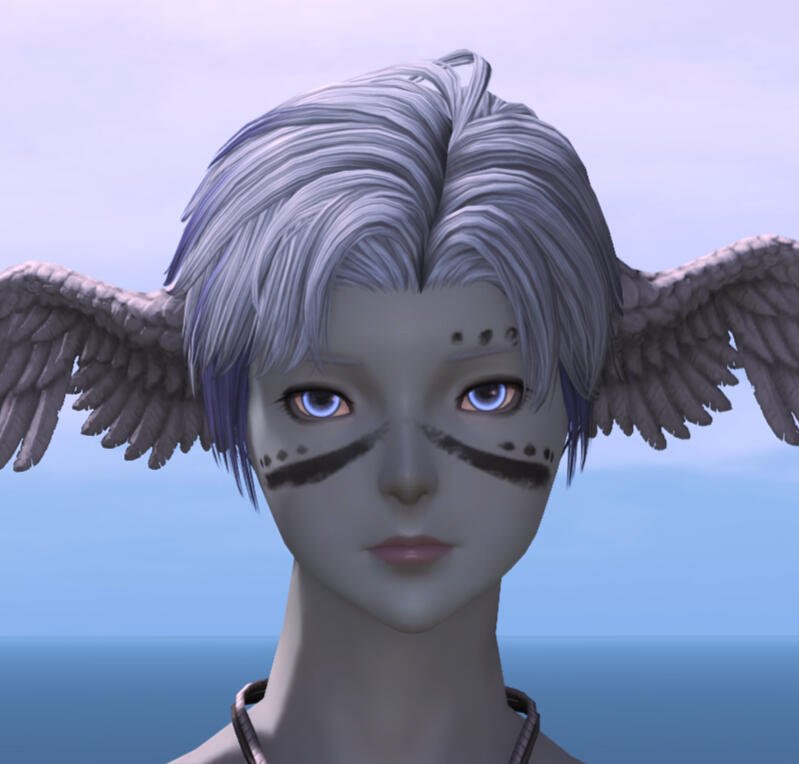
The Taraki, or Storytellers, hold a unique place in Wefi society. As the de facto historians, they preserve the history and legends of their people, and, as such, admission to the order requires strenuous tests to ensure that not only can they recall hundreds of tales with perfect accuracy, but that they are able to add and recall stories related to modern-day Wefi, as well. Most Storytellers will remain Storytellers for life.
T'ebak'i (Law Enforcement)
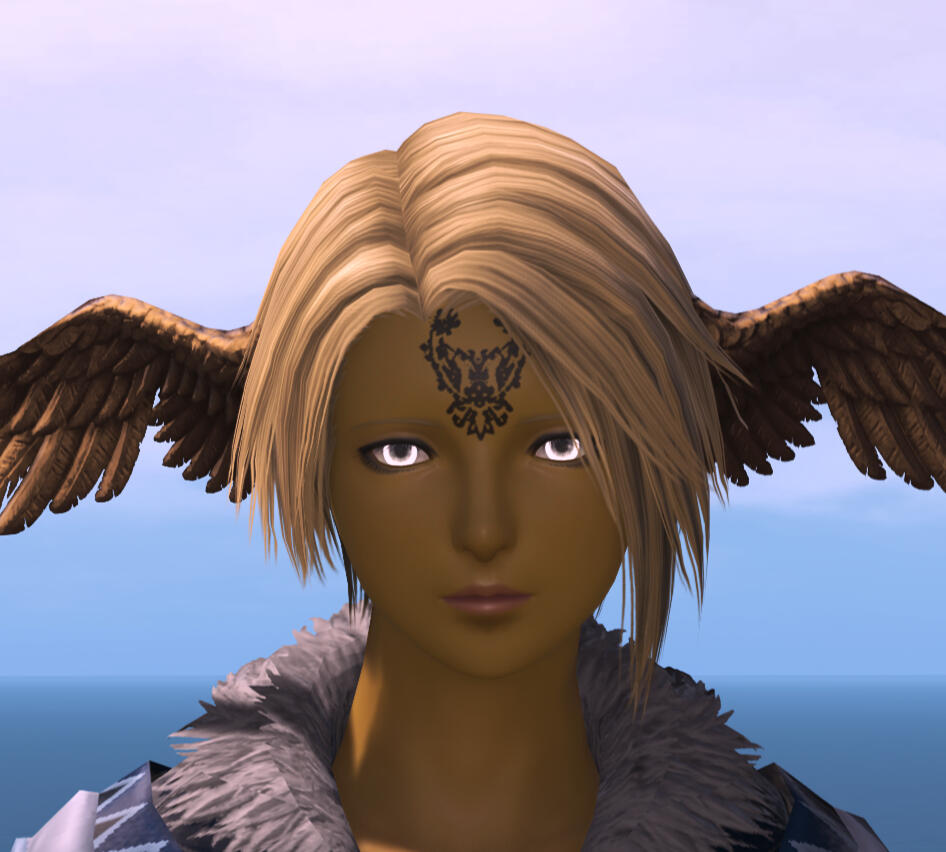
The T'ebak'i function as law enforcement: keeping the peace, carrying out (and enforcing) the exile of Menemi, as well as ensuring dead Menemi are brought to the Silent Plateau for last rites. While Wefi society tends to not be violent as a whole, T'ebak'i are trained to enforce their will physically, if necessary.
Nits’uhi (Cleaners)
The Nits'uhi function as the lowest level of the clerical orders, and is completely voluntary. They tend to the shrines, prepare and clean up after the festivals, and serve the priests and priestesses of the local clergy so that they may focus on their more clerical duties. The position is completely voluntary, and often used to prove one's commitment to society.
Zimitawi (The Silent Order)
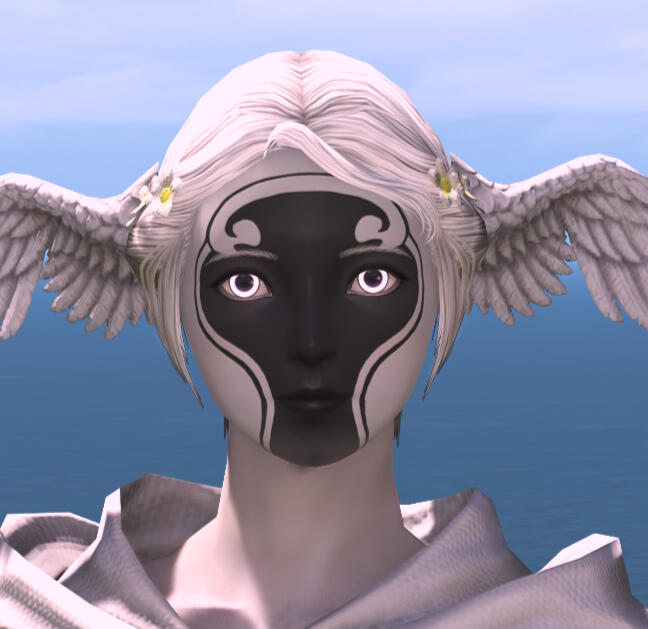
The Silent Order only dwells on the Plateau of Silence, where all Wefi are laid to rest. They are responsible for carrying out the rites for the dead. They do not leave the Plateau, and depend on regular supplies to be delivered from the colonies.Those who join the Silent Order give up their names and family ties upon joining the order. They remain in full religious regalia (the most of any clergy members) and body paint most of the time. They also do not speak, carrying out the rites in a spirit of anonymity and silence. The most devout who join the Silent Order will remove their tongues and wings entirely, although it is not a requirement.Members of the Silent Plateau will spend the rest of their lives on the Plateau. These positions are most commonly sought by older clergy members seeking a form of retirement, but technically any interested Wefi could join, provided a position is open.
Rites
The Rite of Hatching (Yetiwilidi Siri'ati)
The Wefi lay eggs, rather than give live birth. A baby Wefi is unable to hatch out of their shell on their own. When a baby Wefi is ready to hatch, the parents, along with relatives and a priest or priestess will perform the rite, in which the parents will break the shell and remove the baby.
The Rite of Bonding (Yegabicha Sine Siri'ati)
The Wefi mate for life; divorce or separation is incredibly rare and difficult to obtain. The Rite of Bonding functions as the wedding ceremony, often celebrated with family, friends, and a priest or priestess officiating. Often, the two being bonded in the rite will pluck and offer a primary feather to their bondmate, as part of the ceremony.
The Rite of Final Flight (Yemech'ereshawi Yeberera Sine Siri'ati)
This rite is the final rite to be adminstered to a Wefi; upon death, their body is carried to the Plateau of Silence (a flat rock in the center of the ring of islands), where the body will be left exposed on the bare rock for scavengers/weathering to break down the corpse. The Silent Order who live there will sweep the remains into a large central pit when reduced to bone fragments, where they will further break down and turn into powder.This rite is considered essential for a Wefi's spirit to ascend to the realm of the heavens; it is thought that a Wefi who does not receive this rite will be condemned to wander the lower realms for eternity. Even the Menemi are administered this rite, and it is why Wedek'e (fallen ones) are considered to be incredibly tragic, since if their bodies cannot be recovered, they cannot receive this rite.
The Rite of Truth-Seeking (Ye'iwineti Filega Sine Siri'ati)
Carried out by the the Lik’e Kahinati & the High Council, this rite is meant to divine truth from lies, and the contents of the defendant's heart. Only used in cases where someone might be exiled.
Wefi on the First
The Wefi on the First are similar to those on the Source, with few differences. Their racial name on the First is Kinifi.
Naming
Similar to the Wefi on the Source, the four primary surnames of the Kinifi are directional in nature, but slightly different.~ Seminawi - "Northern"
~ Debubi - "Southern"
~ Mi‘irabawi - "Western"
~ Misirak’awi - "Eastern"
Traits
Their traits are largely identical to their Source counterparts, except that metallic colors (gold, silver, bronze) are common throughout the population.
History & The Flood of Light
While the home of the Kinifi, much like the Wefi on the Source, is high above ground level, they were not completely immune to the affects of the Flood of Light that nearly consumed the planet below. Sineaters, either single, in small groups, or the occasional swarm, would rise up from the planet below to attack the Kinifi homeland. The T'ebak'i (the enforcement branch of their social and religious structure) turned from more of a peacekeeping police force to that of a military force, and military preparedness became much more important for the Kinifi by sheer necessity than it ever had been for the Wefi.
Sineaters & Culture
Originally, it was thought the Sineaters were the souls of Kinifi who had fallen from the homeland (Wedek'e) who had found a way to ascend back to the heavens. As their aggressive nature became apparent, some postulated that the demons believed to inhabit the lower realms had learned of the homeland from the fallen, and were determined to destroy it.The thinking shifted, once again, when members of the Kinifi, whether after sustaining a wound from sineaters, or for reasons that were not clear to them, would grow pale, and ill, and then become kokoni, or "cocooned" before arising as sineaters themselves. The prevailing belief became that the spirits in the afterlife had changed their method of accepting mortals into the heavens.Thereafter, those who became light touched would journey or be taken to their Silent Plateau, to await their kononi; once they arose as sineaters, they would be dispatched by the Silent Order (The Rite of Ascension, or Ye‘irigeti Siri‘ati). Average Kinifi, once they became aged, or gravely injured, or otherwise faced a fatal prognosis, would be taken to the Silent Plateau to receive the touch of the light (The Rite of Supplication, or Yelimena Siri‘ati); and then wait out their days for the kokoni and then their own Rite of Ascension. The slaying of the sineater form was considered the final step required to release one's spirit from the bonds of mortality.The Silent Order remains an honored position, but those who were permitted to join were accepted based on their military prowess, rather than strict religiosity. Turnover was also much higher, as those that stayed on the Silent Plateau would invitably also succumb to the touch of Light.Those who died without becoming sineaters, or anidi arege (ascended ones), as they eventually came to be called, would have their bodies cast into the world below, under the belief that they would need to endure whatever tribulations the lower world held, until the spirits in the heavens determined them sufficiently worthy of becoming anidi arege and permitting their ascension in sineater form.
The Return of Night
The skies growing dark again caused concern in the Kinifi homeland, unsure of what it might mean. A short time later, an amaro landed on their homeland; it could speak, and obviously wasn't a sineater. The amaro, worn from its journey, chose to stay on the Kinifi homeland and learned their language. In exchange, it told them about the realm below; land not suspended in the air; a giant crystal tower, airships that could rise to great heights; as well as the identity of some of the artifacts that the Kinifi had collected from the sineaters that arose from the world below, including several whisperreeds (linkpearls).Since the amaro was evidence that those below were living, and could ascend, perhaps the reverse was true. Some scouts, equipped with whisperreeds, have been sent out in the company of the amaro to investigate the parts of the world below that survived.
Making a Wefi
Creating the look of the race in FFXIV requires mods. I will not go into how to install mods or Mare or any of that; instead I will mention here some of the mods I use to achieve this look.The Wefi, both male and female, are based on the female Au ra model. You could theoretically use other models, but I have not tried this.~Scaleless Au ra Females - used to remove the scales, tails, and horns from the female Au ra model.~Meteion Costume - I use the headpiece and legs from this.~ Tail Mod - Overrides the Au ra tail 4 with Meteion's tail. Color can be edited like the wing mod below.~wing mod - I created this in Penumbra tweaking the colors of the Angel or Archangel Wings fashion accessory. Create a new mod by clicking on the + sign on the lower left of the Penumbra Mods interface > Advanced Editing > Import from Screen > select option next to Angel Wings Material #0 that says "Add a copy of this file to the current option" > go to Materials tab > select file > go to color table and change both Diffuse and Specular for all the rows to your desired color.~height mod - I created this in Penumbra. Create a new mod > Advanced editing > Meta manipulation > Racial scaling edit > Raen or Xaela > Female minimum size. Below are the scaling you can use, or make and use a copy of this Google Sheets calculator
| Height in inches | Scaling |
|---|---|
| 3' 8" | 0.712 |
| 3' 9" | 0.728 |
| 3' 10" | 0.744 |
| 3' 11" | 0.76 |
| 4' 0" | 0.777 |
| 4' 1" | 0.793 |
| 4' 2" | 0.809 |
Gallery

Info & Contact
A great deal of the names/words are based on anglicized Ahambric/Ethiopean words. As I continue to develop the race, I hope to incorporate more elements/stories from Ethiopean culture.If other people are interested in creating Wefi, I'm fine with that! I would just like to be contacted for discussion, to ensure lore remains consistent (and of course, to meet your character!).You can reach me at:
~ Discord at .rebeldragon
~ BlueSky at @rebel-dragon.bsky.social .
~The Etheiryan Menagerie discord